Orchestrate Complexity: Case Management Portal for Android TV Partners

Migrating a fragmented, manual workflow into a scalable digital ecosystem for Google’s Enterprise Partners.

TL;DR
Task

Consolidate a manual TV Device Licensing workflow (emails, spreadsheets) and integrate it into the existing Android Partner Portal.

Problem

The existing portal was optimized for Smartphone Licensing (Linear/Simple). It broke under the weight of TV Device Licensing, which has 4x higher data density and 2x more dependencies.

Solution

A dual-architecture strategy: Linearizing the intake logic (Tree Structure) to fit the platform, and Centralizing negotiation into a "Collaboration Hub" (Network Graph).

Impact

Reduced manual support tickets by ~40% and established the "Collaboration Hub" as a standard component in Google’s Angular Enterprise Design System.

My Role

Product Designer

Contract via Artech

  • Design Collaboration: Conduct research with UX researcher and Senior Interaction Designer. Report to a Senior Interaction Designer and a Design Lead.
  • Strategy & Execution: Led the end-to-end design from architectural definition to high-fidelity handoff.
  • Global Collaboration: Orchestrated alignment across Mountain View, CA & India (Engineering), London (Product Management), and Stakeholders in Sunnyvale, CA & Tokyo, Japan.
  • The Problem: The "Incompatibility" Gap

    The existing platform (built for Mobile) broke under the complexity of TV.
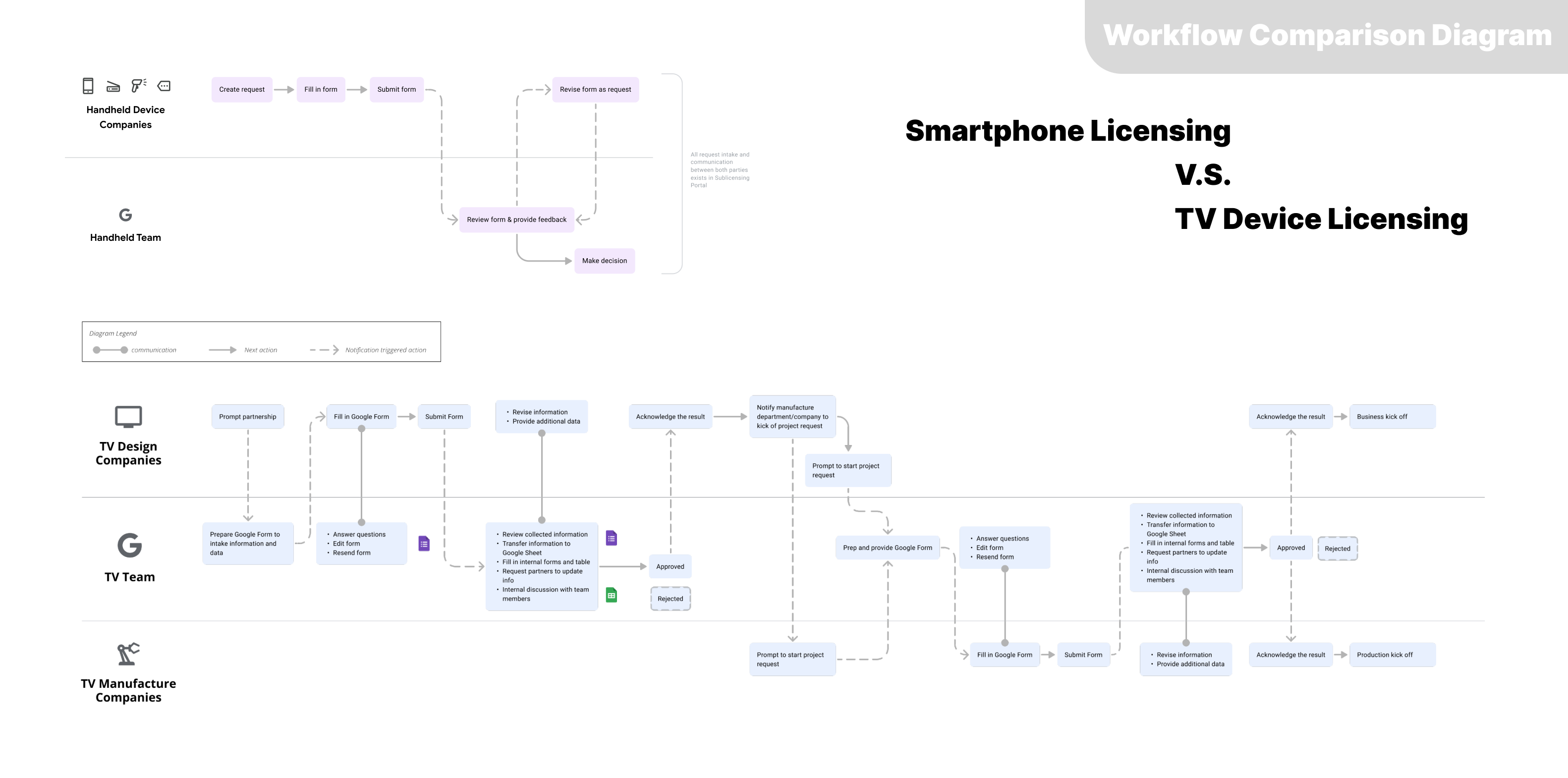
    The Android Partner Portal was originally built for Smartphone Licensing—a mature, linear process. However, the TV Device Licensing workflow was fragmented across emails, spreadsheets, and phone calls because the existing portal couldn't handle its complexity.

    • Complexity Mismatch: TV certification requires tracking 4x more technical parameters than phones.
    • Dependency Hell: Unlike phones, TV inputs have cascading dependencies (e.g., Choosing "Chipset A" changes the required "Remote Control" fields).
    • The "Black Hole": Once partners submitted data via email, they lost visibility, leading to constant "What is my status?" emails.
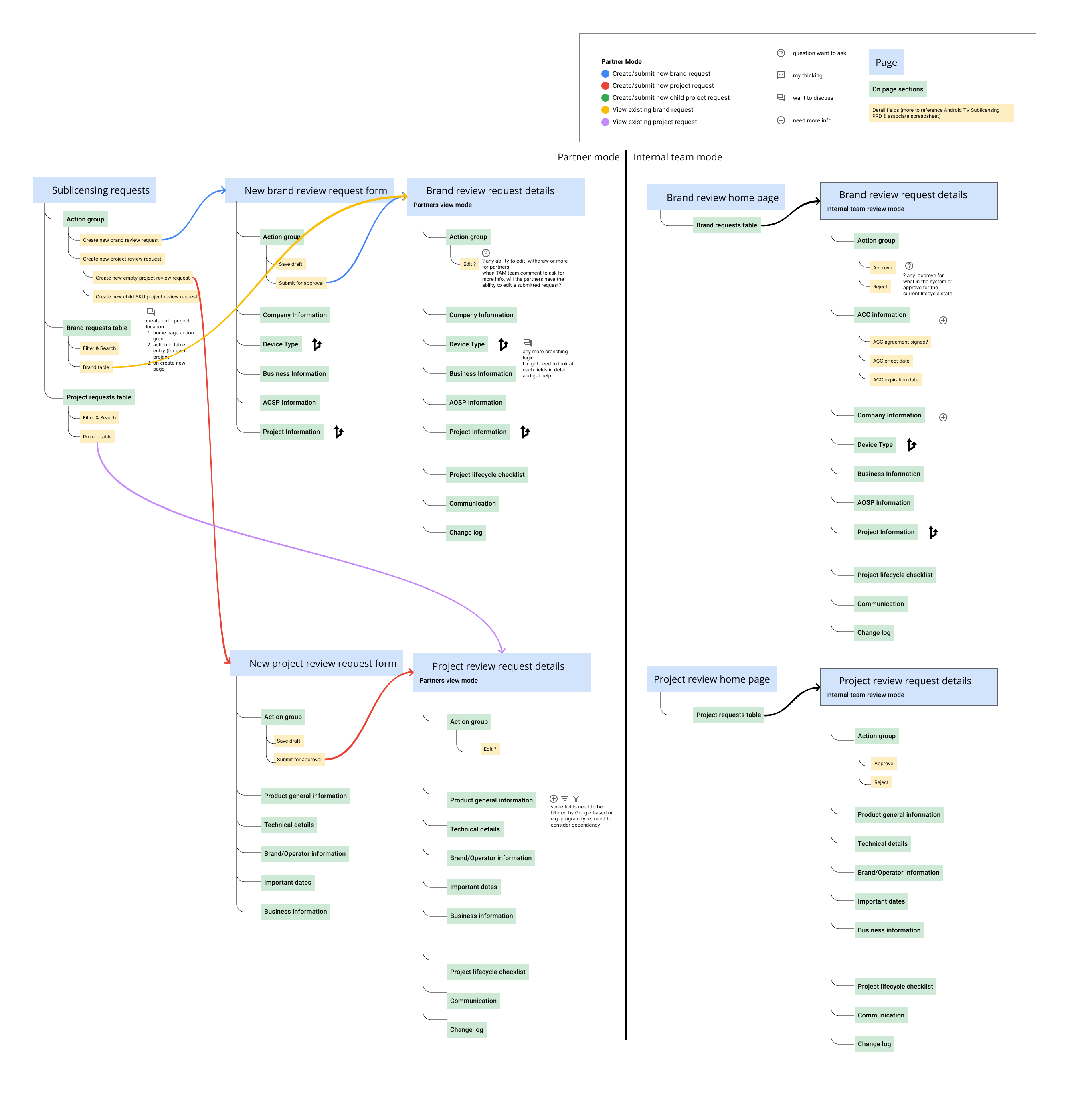
    Sublicensing Portal Takes Handheld but not TV product
    Research & Insights: Defining the Architecture

    It wasn't just one problem; it was two distinct architectural challenges.

    By analyzing the "Dependency Map" of the TV requirements, I realized we couldn't just "copy-paste" the mobile flow. I used the Cynefin Framework to categorize the friction:

    • Insight A (The Intake): The form submission is a Complicated problem. It follows strict logic, but the volume is overwhelming. It needs Simplification (Tree Structure).
    • Insight B (The Review): The negotiation process is a Complex problem. It involves human back-and-forth. It needs Visibility (Network Graph).
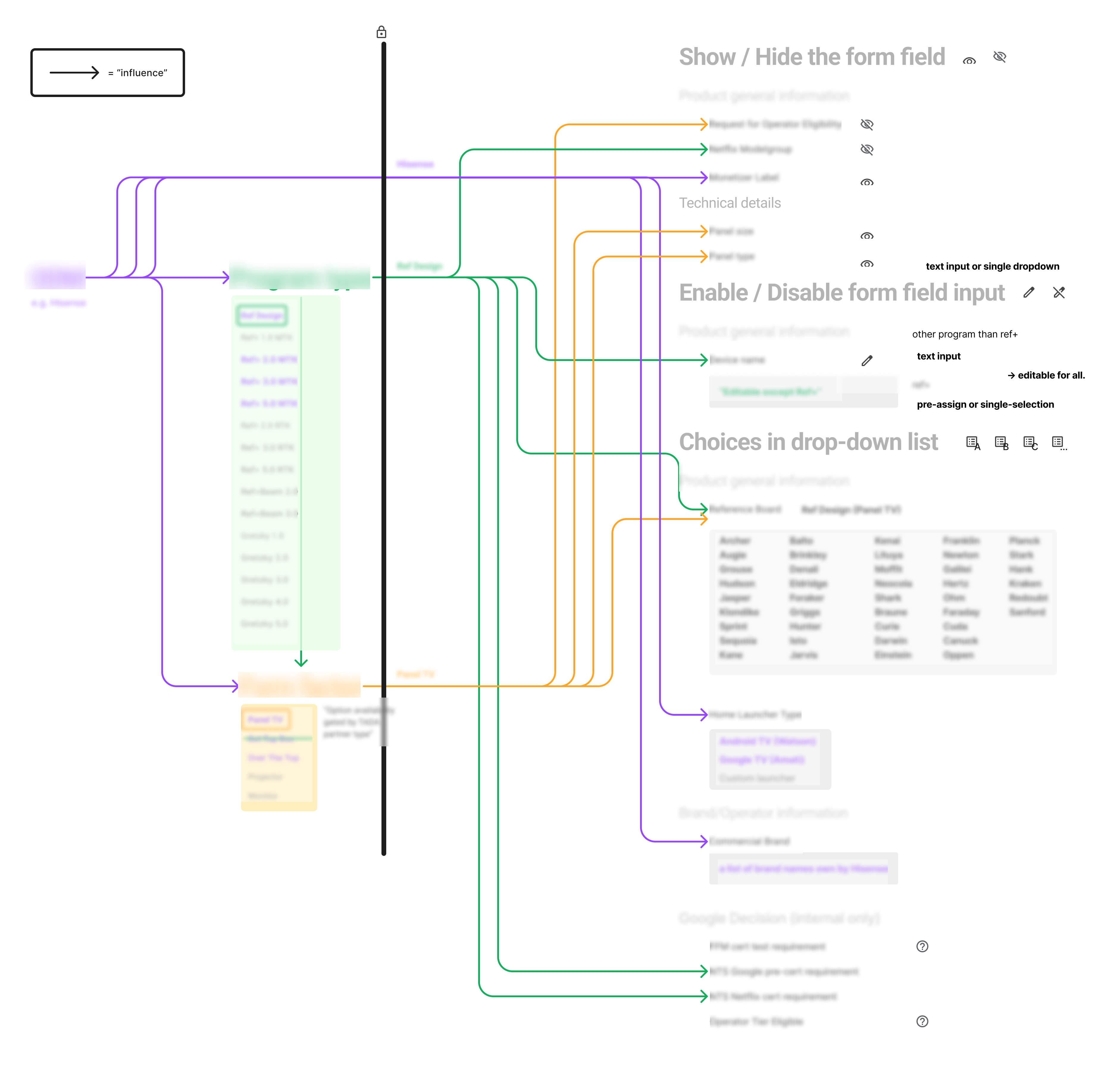
    Mapping the Dependency Hell: Visualizing the hidden complexity of TV Device Licensing reqiruemnts.
    Solution Part A: Linearizing the Logic (The Tree)

    Taming the Long Long Form with "Pruning" Strategies.

    To make the heavy TV licencing fit into the mobile licencing optimized platform, I need to reduce frictions.
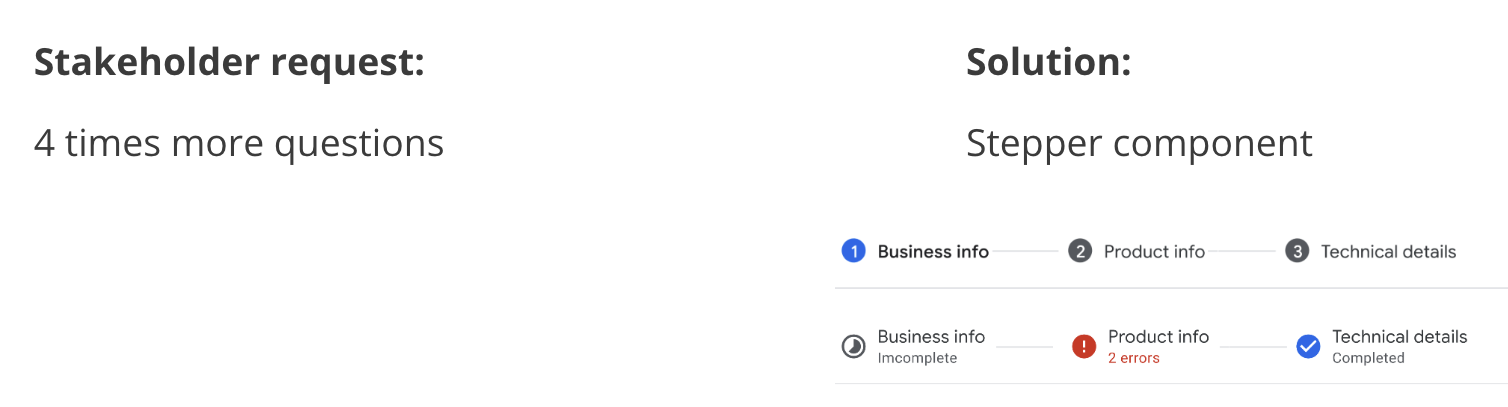
    This was a 'Complicated' logic problem. It needed structure. I treated this as a Tree Structure.
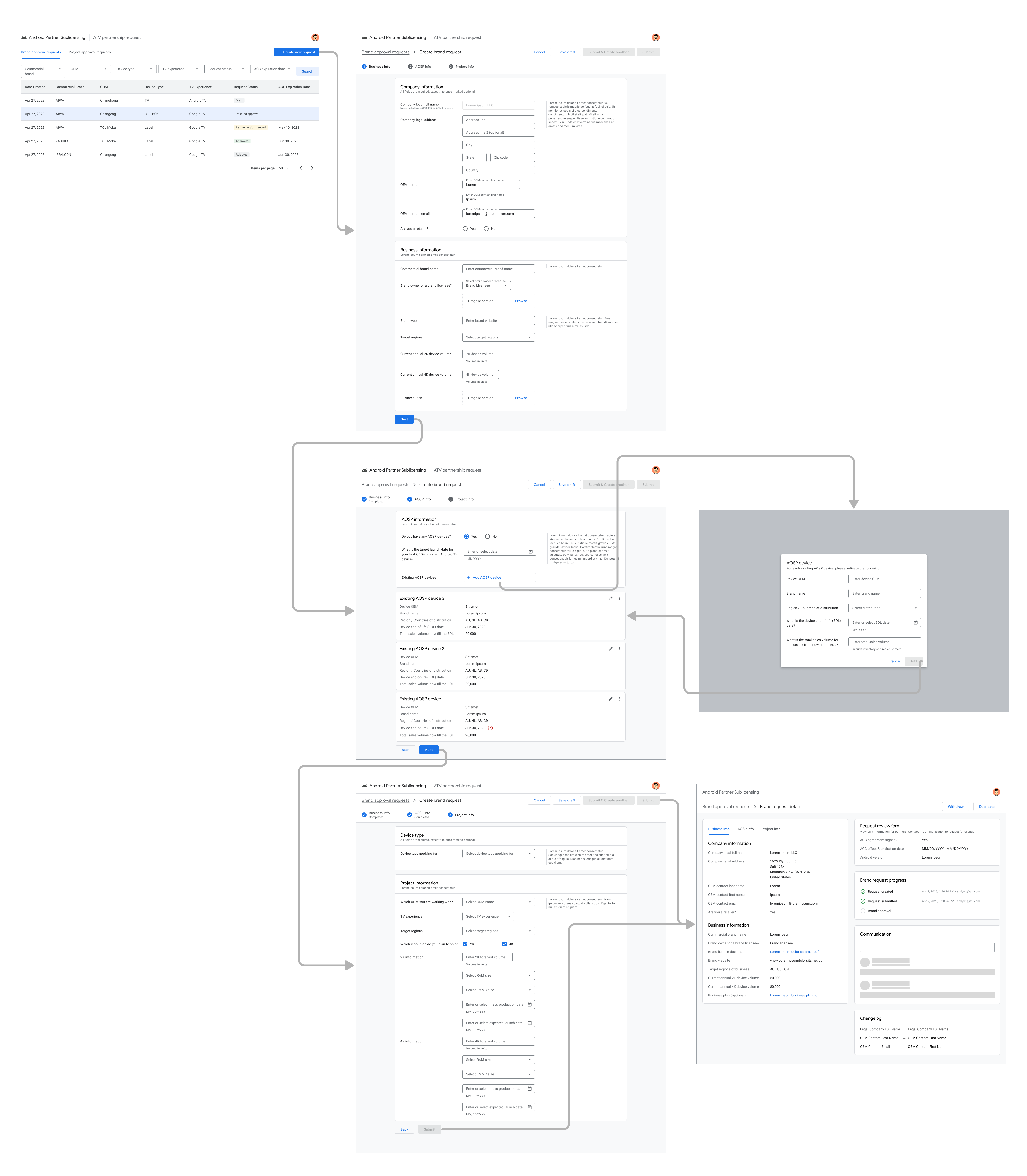
    • Action: Designed a dynamic Stepper Component with conditional branching logic.
    • The Win: This converted a multi-dimensional "Decision Tree" into a linear path. Users are only exposed to the specific branch relevant to them (e.g., Only show '4K Requirements' if '4K' is selected).
    • Result: Removed 60% of irrelevant fields for the average user.
    Solution Part B: The Collaboration Hub (The Network)

    Closing the Communication Loop with Object-Oriented UX.

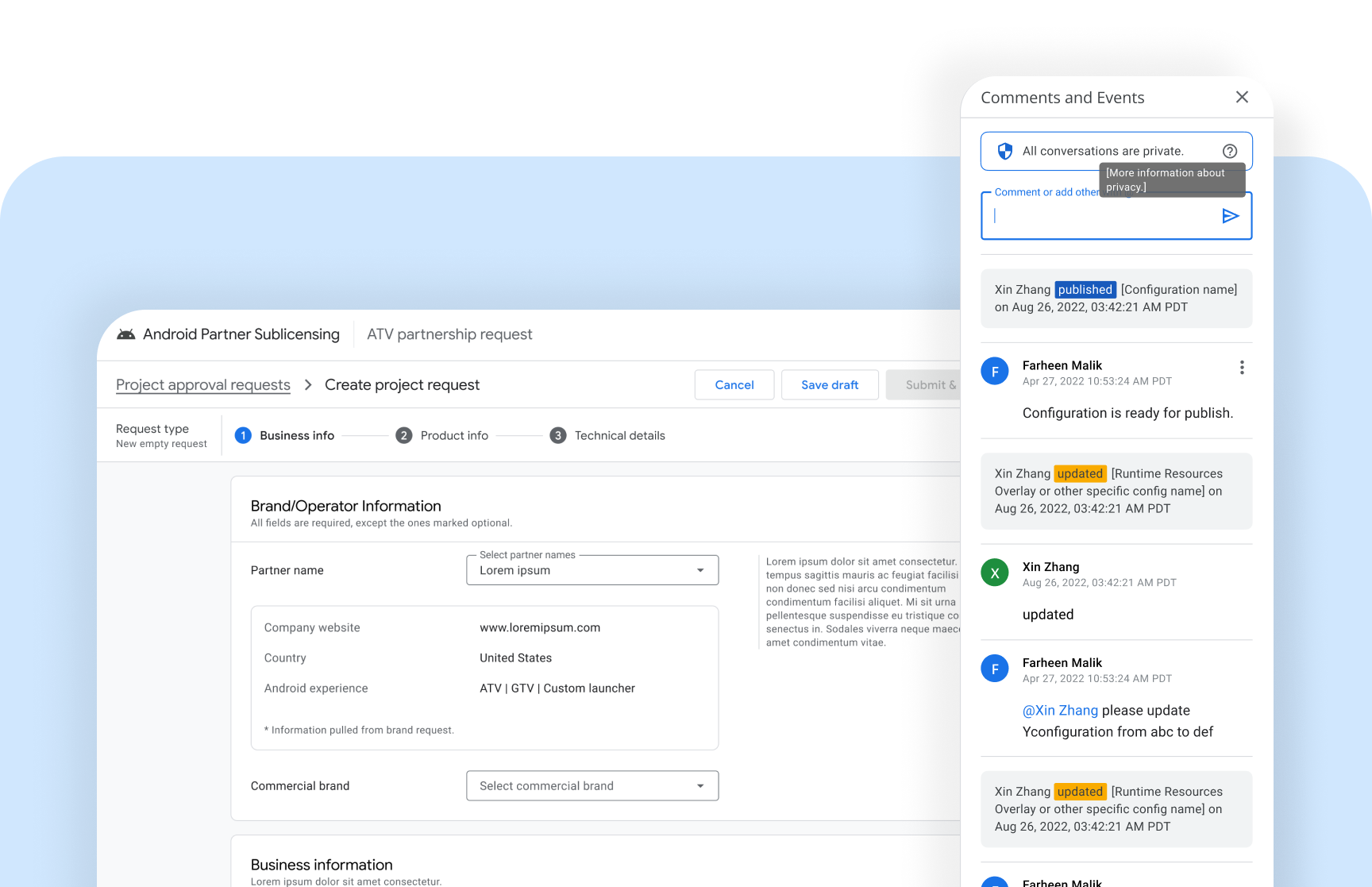
    The old workflow trapped communication in email threads, disconnected from the actual ticket. I introduced a Contextual Collaboration Hub.

    • Action: I designed a unified "Activity Timeline" pattern.
    • The Win: Instead of a linear status bar, this is a Network Graph view. It treats "Comments," "Status Changes," and "File Uploads" as interconnected objects in a single feed.
    • Key Feature: Partners can reply to a specific error message inside the ticket, creating a Single Source of Truth.
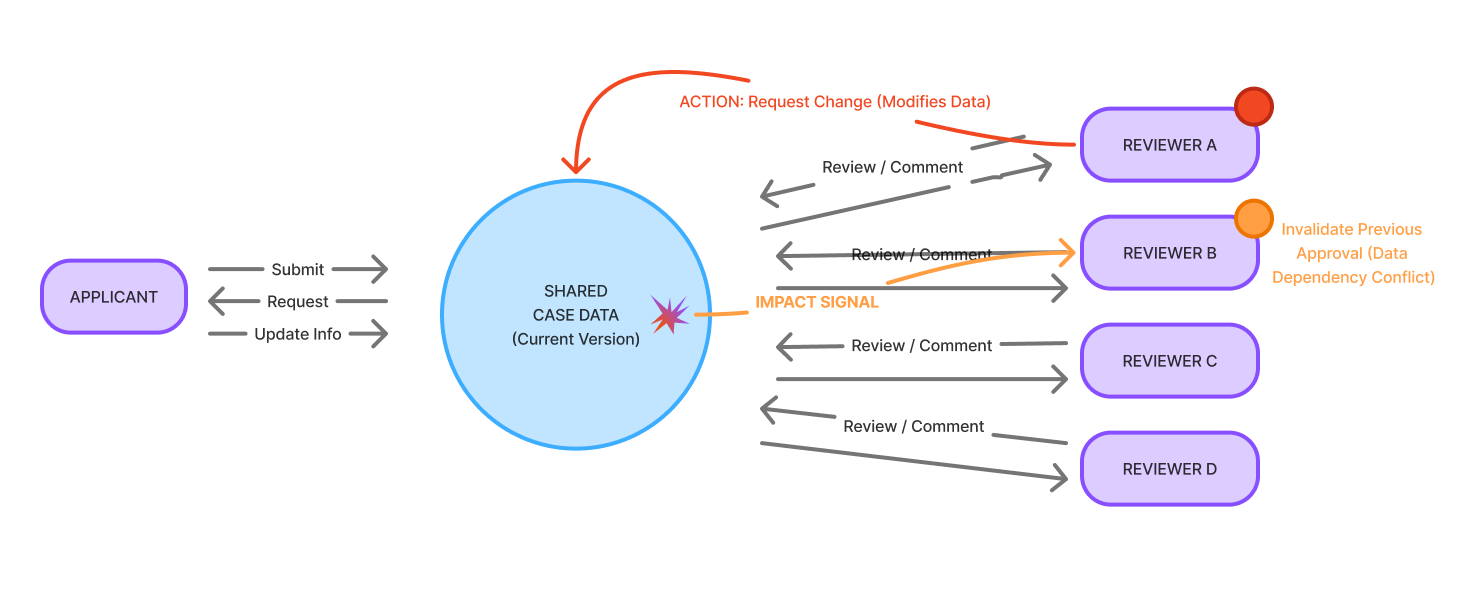
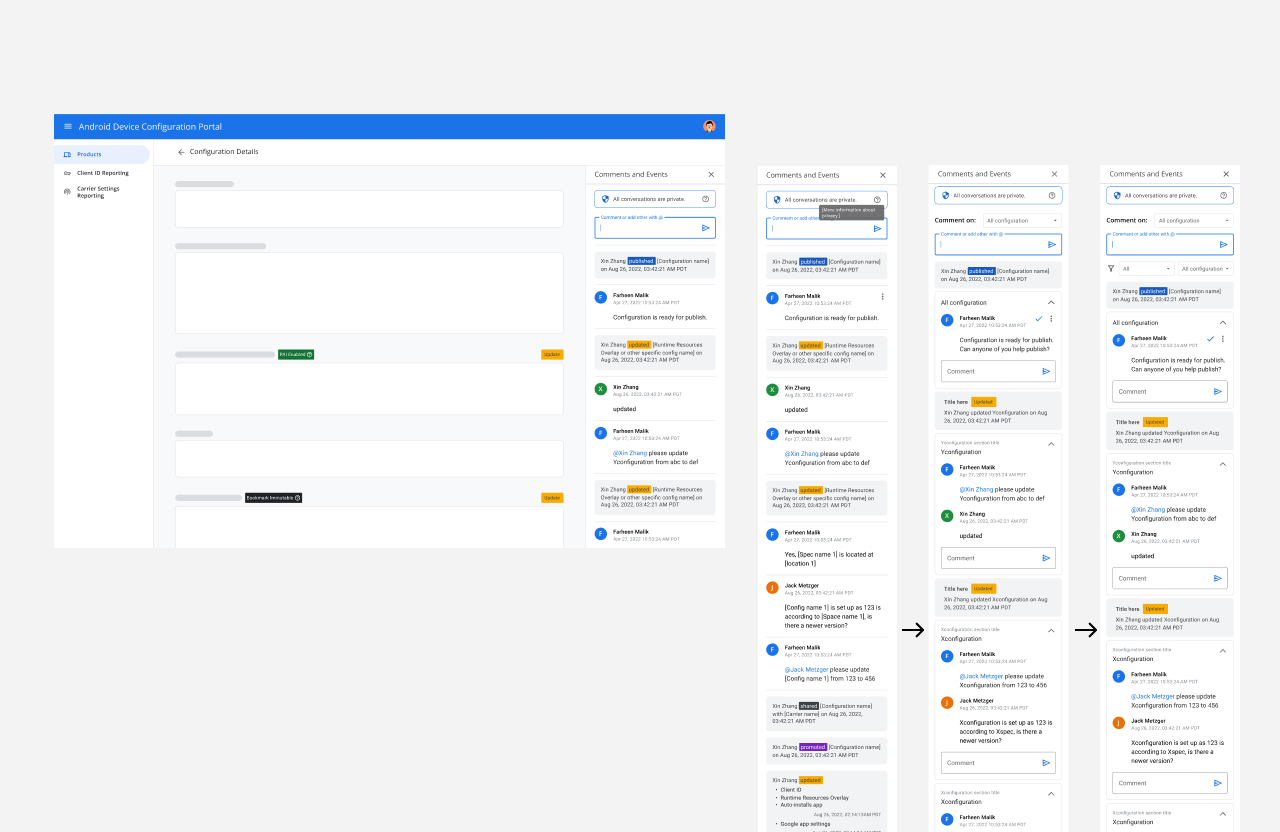
    This is where I pivoted from a linear flow to a Networked Hub. I designed this 'Contextual Collaboration Panel.' Instead of emailing, partners reply directly inside the ticket. Crucially, this is Object-Oriented: A comment is tied to a specific status change or document. This created a Single Source of Truth for the entire lifecycle.

    This wasn't just a one-off fix. The 'Collaboration Hub' pattern was so effective at solving complex negotiation that I documented it and contributed it to Google's internal Angular Enterprise Design System. It’s now used by other internal tools to manage complex workflows.

    Outcomes & Impact

    From Project Fix to Platform Standard.
  • Operational Efficiency: Reduced manual support tickets by ~40% by giving partners transparency into their status.
  • Speed to Market: Reduced the "Back-and-forth" negotiation time, allowing TV devices to get certified faster.
  • System Contribution: The "Collaboration Hub" pattern was so effective that it was codified and proposed as a standard component for the Google Angular Enterprise Design System, allowing other internal tools to adopt this "Complex Case Management" workflow.